What’s Been Up
The 4 things I do to my skin every year before July hits
Read Now


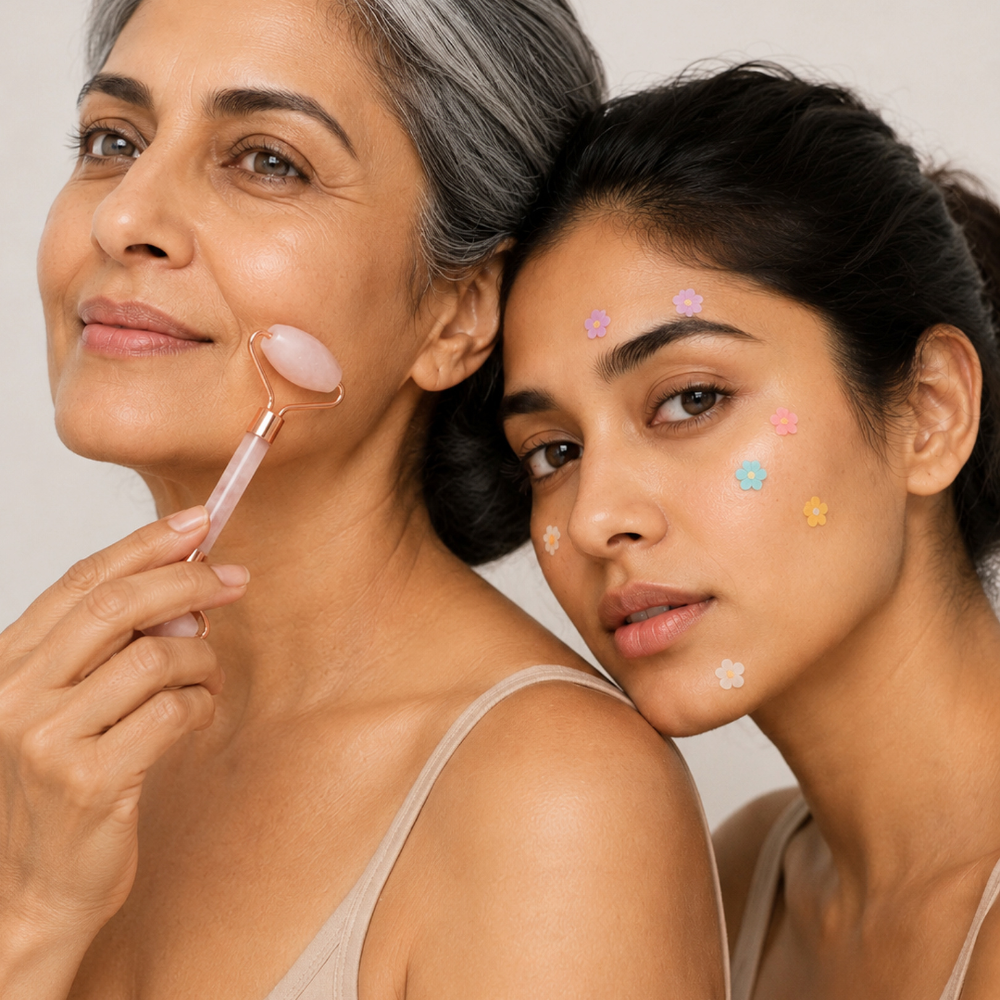

Every time I go home, I find myself standing in my mum’s bathroom for longer than necessary. I’ll open the cabinet, look through the products on her shelf and feel a quiet fascination. Her skincare routine looks nothing like mine. There are no colour-coded serums, no products arranged according to morning and night routines, no carefully researched ingredients lined up side by side. Her shelf is simple: a moisturiser she has repurchased for years, a basic face wash, coconut oil poured into an old bottle, sunscreen she remembers to use mostly because I remind her and one or two newer products she’s recently started trying because someone recommended them to her.
For the longest time, I assumed this simplicity came from a lack of awareness. I thought my generation simply knew more about skincare. We grew up understanding ingredients, hydration, sun protection and skin barriers in a way previous generations didn’t. We’ve had access to better products, better information and a far wider understanding of what skincare can actually do. And honestly, I love that. I love that skincare today can be thoughtful, personalised and genuinely effective.
But lately, I’ve started wondering whether my mum’s generation understood more than we’ve realised.
There’s no denying that skincare today is exciting. We understand our skin better than ever before and there are products designed for almost every concern imaginable. A good routine can genuinely improve skin health, confidence and comfort. And if someone enjoys layering serums, following a detailed 12-step routine and turning skincare into a ritual, there’s absolutely nothing wrong with that. For many people, skincare is creative, therapeutic and deeply personal.
At the same time, somewhere along the way, it also became loaded.
We’re encouraged to pay close attention to our faces—texture, pores, pigmentation and dehydration—until skincare starts to feel less like care and more like constant monitoring. Social media only intensifies that mindset. There is always another ingredient to learn about, another launch everyone swears by and another concern you hadn’t even considered until someone pointed it out online.
I didn’t realise how much of this mindset I had absorbed until I watched my mum getting ready for bed one evening. She washed her face, applied moisturiser and switched off the bathroom light within minutes. There was no sense of performance to it. She wasn’t trying to optimise herself before going to sleep. She was simply taking care of her skin in a way that fit naturally into her life. And strangely, that simplicity felt unfamiliar to me.
Of course, there are things my generation understands better. My mum spent years barely thinking about sunscreen and there are skincare habits I’m glad we’ve become more informed about. But our mothers also grew up in a completely different environment than we did.
Pollution levels were lower, people spent less time under artificial lighting and there wasn’t the same constant exposure to screens and environmental stressors. Their skincare needs were shaped by a different climate, both literally and culturally.
That’s part of why I don’t think this conversation is about one approach being better than the other. Modern life places different demands on our skin and there’s real value in having products that help address those concerns. But while our environments may have changed, I still think my mum’s generation was protected from something mine experiences constantly: relentless self-scrutiny.
My mum did not grow up analysing her face through front cameras or consuming endless skincare content designed to make people hyper-aware of how they look. Beauty existed in her life, but it didn’t dominate her attention in the same way. That difference changes how people emotionally engage with skincare.
One thing I’ve always noticed about my mum is how loyal she is to products. Once she finds something she likes, she sticks to it for years. Meanwhile, my own routine changes constantly. I genuinely enjoy trying new skincare and discovering products that work differently for my skin. But watching my mum has made me appreciate the comfort of familiarity too.
Her skincare products have quietly become part of her everyday life. The same moisturiser sits on her shelf year after year because it works for her and that is enough. There’s something grounding about that consistency in a world where we are constantly encouraged to search for something better.
Maybe that’s why I always end up reaching for her moisturiser whenever I’m home. Not because it’s superior to everything on my own shelf, but because it makes skincare feel uncomplicated again.
And honestly, that’s the balance I’m slowly trying to find for myself. I still enjoy skincare and I still love discovering products that genuinely work for me, but I’ve realised I personally feel better with a routine that is more pared down and intuitive. That doesn’t make elaborate routines unnecessary—everyone approaches skincare differently. But simplifying things has made skincare feel calmer and far more enjoyable for me.
Lately, I’ve started simplifying my own routine—not because I’ve stopped loving skincare, but because I’ve become more conscious of the mindset I bring to it. I still enjoy products, ingredients and experimentation. But I no longer want every routine to feel tied to the idea that I should constantly be doing more.
Watching my mum made me realise that skincare feels very different when it comes from a place of care rather than criticism. Modern skincare isn’t the problem. In many ways, it’s better than it has ever been. The challenge is learning how to engage with it without turning every routine into pressure.
For years, I thought my mum’s skincare shelf looked simpler because her generation knew less. Now I think it also reflects something else entirely: the ability to know when enough is enough.
There’s no denying that skincare today is exciting. We understand our skin better than ever before and there are products designed for almost every concern imaginable. A good routine can genuinely improve skin health, confidence and comfort. And if someone enjoys layering serums, following a detailed 12-step routine and turning skincare into a ritual, there’s absolutely nothing wrong with that. For many people, skincare is creative, therapeutic and deeply personal.
At the same time, somewhere along the way, it also became loaded.
We’re encouraged to pay close attention to our faces—texture, pores, pigmentation and dehydration—until skincare starts to feel less like care and more like constant monitoring. Social media only intensifies that mindset. There is always another ingredient to learn about, another launch everyone swears by and another concern you hadn’t even considered until someone pointed it out online.
I didn’t realise how much of this mindset I had absorbed until I watched my mum getting ready for bed one evening. She washed her face, applied moisturiser and switched off the bathroom light within minutes. There was no sense of performance to it. She wasn’t trying to optimise herself before going to sleep. She was simply taking care of her skin in a way that fit naturally into her life. And strangely, that simplicity felt unfamiliar to me.
Of course, there are things my generation understands better. My mum spent years barely thinking about sunscreen and there are skincare habits I’m glad we’ve become more informed about. But our mothers also grew up in a completely different environment than we did.
Pollution levels were lower, people spent less time under artificial lighting and there wasn’t the same constant exposure to screens and environmental stressors. Their skincare needs were shaped by a different climate, both literally and culturally.
That’s part of why I don’t think this conversation is about one approach being better than the other. Modern life places different demands on our skin and there’s real value in having products that help address those concerns. But while our environments may have changed, I still think my mum’s generation was protected from something mine experiences constantly: relentless self-scrutiny.
My mum did not grow up analysing her face through front cameras or consuming endless skincare content designed to make people hyper-aware of how they look. Beauty existed in her life, but it didn’t dominate her attention in the same way. That difference changes how people emotionally engage with skincare.
One thing I’ve always noticed about my mum is how loyal she is to products. Once she finds something she likes, she sticks to it for years. Meanwhile, my own routine changes constantly. I genuinely enjoy trying new skincare and discovering products that work differently for my skin. But watching my mum has made me appreciate the comfort of familiarity too.
Her skincare products have quietly become part of her everyday life. The same moisturiser sits on her shelf year after year because it works for her and that is enough. There’s something grounding about that consistency in a world where we are constantly encouraged to search for something better.
Maybe that’s why I always end up reaching for her moisturiser whenever I’m home. Not because it’s superior to everything on my own shelf, but because it makes skincare feel uncomplicated again.
And honestly, that’s the balance I’m slowly trying to find for myself. I still enjoy skincare and I still love discovering products that genuinely work for me, but I’ve realised I personally feel better with a routine that is more pared down and intuitive. That doesn’t make elaborate routines unnecessary—everyone approaches skincare differently. But simplifying things has made skincare feel calmer and far more enjoyable for me.
Lately, I’ve started simplifying my own routine—not because I’ve stopped loving skincare, but because I’ve become more conscious of the mindset I bring to it. I still enjoy products, ingredients and experimentation. But I no longer want every routine to feel tied to the idea that I should constantly be doing more.
Watching my mum made me realise that skincare feels very different when it comes from a place of care rather than criticism. Modern skincare isn’t the problem. In many ways, it’s better than it has ever been. The challenge is learning how to engage with it without turning every routine into pressure.
For years, I thought my mum’s skincare shelf looked simpler because her generation knew less. Now I think it also reflects something else entirely: the ability to know when enough is enough.


There’s no denying that skincare today is exciting. We understand our skin better than ever before and there are products designed for almost every concern imaginable. A good routine can genuinely improve skin health, confidence and comfort. And if someone enjoys layering serums, following a detailed 12-step routine and turning skincare into a ritual, there’s absolutely nothing wrong with that. For many people, skincare is creative, therapeutic and deeply personal.
At the same time, somewhere along the way, it also became loaded.
We’re encouraged to pay close attention to our faces—texture, pores, pigmentation and dehydration—until skincare starts to feel less like care and more like constant monitoring. Social media only intensifies that mindset. There is always another ingredient to learn about, another launch everyone swears by and another concern you hadn’t even considered until someone pointed it out online.
I didn’t realise how much of this mindset I had absorbed until I watched my mum getting ready for bed one evening. She washed her face, applied moisturiser and switched off the bathroom light within minutes. There was no sense of performance to it. She wasn’t trying to optimise herself before going to sleep. She was simply taking care of her skin in a way that fit naturally into her life. And strangely, that simplicity felt unfamiliar to me.
Of course, there are things my generation understands better. My mum spent years barely thinking about sunscreen and there are skincare habits I’m glad we’ve become more informed about. But our mothers also grew up in a completely different environment than we did.
Pollution levels were lower, people spent less time under artificial lighting and there wasn’t the same constant exposure to screens and environmental stressors. Their skincare needs were shaped by a different climate, both literally and culturally.
That’s part of why I don’t think this conversation is about one approach being better than the other. Modern life places different demands on our skin and there’s real value in having products that help address those concerns. But while our environments may have changed, I still think my mum’s generation was protected from something mine experiences constantly: relentless self-scrutiny.
My mum did not grow up analysing her face through front cameras or consuming endless skincare content designed to make people hyper-aware of how they look. Beauty existed in her life, but it didn’t dominate her attention in the same way. That difference changes how people emotionally engage with skincare.
One thing I’ve always noticed about my mum is how loyal she is to products. Once she finds something she likes, she sticks to it for years. Meanwhile, my own routine changes constantly. I genuinely enjoy trying new skincare and discovering products that work differently for my skin. But watching my mum has made me appreciate the comfort of familiarity too.
Her skincare products have quietly become part of her everyday life. The same moisturiser sits on her shelf year after year because it works for her and that is enough. There’s something grounding about that consistency in a world where we are constantly encouraged to search for something better.
Maybe that’s why I always end up reaching for her moisturiser whenever I’m home. Not because it’s superior to everything on my own shelf, but because it makes skincare feel uncomplicated again.
And honestly, that’s the balance I’m slowly trying to find for myself. I still enjoy skincare and I still love discovering products that genuinely work for me, but I’ve realised I personally feel better with a routine that is more pared down and intuitive. That doesn’t make elaborate routines unnecessary—everyone approaches skincare differently. But simplifying things has made skincare feel calmer and far more enjoyable for me.
Lately, I’ve started simplifying my own routine—not because I’ve stopped loving skincare, but because I’ve become more conscious of the mindset I bring to it. I still enjoy products, ingredients and experimentation. But I no longer want every routine to feel tied to the idea that I should constantly be doing more.
Watching my mum made me realise that skincare feels very different when it comes from a place of care rather than criticism. Modern skincare isn’t the problem. In many ways, it’s better than it has ever been. The challenge is learning how to engage with it without turning every routine into pressure.
For years, I thought my mum’s skincare shelf looked simpler because her generation knew less. Now I think it also reflects something else entirely: the ability to know when enough is enough.