
Ingredient Lab
Bodycare ingredients to add to your daily routine RN
Read Now


Chapped, flaky lips can make even the most luxurious lipstick look uneven. And while we’re diligent about exfoliating our face and body, our lips often get overlooked—despite needing gentle, regular exfoliation just as much. (And no, using your toothbrush doesn’t count.)
The skin on your lips is thinner than the rest of your face and lacks oil glands, which makes it more prone to dryness and the buildup of dead skin. The right exfoliating ingredients can completely change that, softening rough texture and leaving your lips smooth, hydrated and ready for pigment. But not all exfoliants are created equal.
Here’s how to make the most of the ingredients that actually work when it comes to lip exfoliation.

.jpeg)


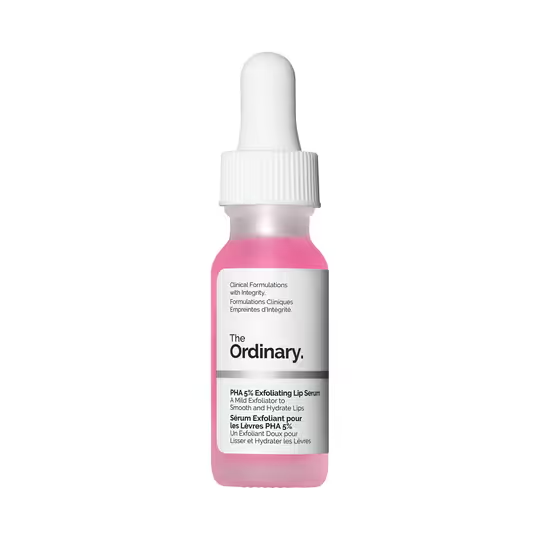
Thought serums were just for your face? The Ordinary is here to prove you wrong. Their newest drop is a lip serum that exfoliates, brightens and plumps all at once. The hero formula is the 5% PHA, a gentle exfoliant that buffs away dead skin without the sting. And before you wonder if that might disrupt your lip barrier, they’ve already solved it. The formula is cushioned with glycerin, so while PHA smoothes, glycerin hydrates and repairs the barrier. With consistent use, expect lips that look plumper, smoother, more radiant and healthy. Apply a thin layer on clean, dry lips every other evening. Let it dry completely, then follow with a lip balm if you need a little extra moisture.
If Laneige’s iconic Lip Sleeping Mask feels too heavy for everyday use, the Lip Glowy Balm is the perfect alternative. Delivering the same intense hydration without the weight, this tinted balm is ideal for daytime wear. Formulated with shea and murumuru seed butters, it deeply nourishes and softens chapped lips while locking in moisture. As a bonus, it leaves behind a pinkish glossy tint for a sheer, effortless wash of colour. And the scent? Absolutely divine.
You’ve seen it on every beauty moodboard, tucked between glowy skin inspo and glossy lids—the one pink lip balm that’s practically a staple. No matter your vibe—clean girl, coquette, office siren or somewhere in-between—chances are this berry-flavored balm is clipped to your keys or floating in your bag. And honestly, why wouldn’t it be? It’s packed with shea butter and murumuru seed butter (a dream team for soft, smooth lips), delivers a juicy wash of color and has that subtle shine that looks effortless but pulled together. Plus, it’s pocket-sized, keychain-friendly and built for quick swipes on the go. For the hot days when your lips are begging for hydration, or the nights when you need a little something extra, this one’s your no-brainer. Restock it now for less.
For soft, hydrated lips with just the right amount of glow, Laneige’s Lip Glowy Balm is a keeper. The berry flavour is refreshing and it’s perfect for those dry lip days. Once you try it, you’ll be grabbing extras to make sure you always have one nearby.
One swipe and you’ll understand the hype. The viral Laneige balm gives your lips a juicy, just-bitten shine with the comfort of a nourishing treatment. The berry scent is chef’s kiss and—unlike stickier formulas—it melts in like a lip mask-gloss hybrid. It’s the product you keep in every bag—and panic when it’s out of stock.
“This one actually surprised me. I didn’t expect a lip treatment to feel this nourishing without being greasy,” Megha Sharma says. “I use it when my lips feel rough or uneven, and it somehow softens and smooths them out overnight. It’s like a vitamin boost for your lips—you can feel the difference by morning.”
PHAs are the gentlest chemical exfoliants out there, making them perfect for the soft skin of your lips. These larger-molecule acids work on the surface of the skin without penetrating into the deeper levels, which means less redness, irritation, while still working to eradicate dead skin cells. PHAs like gluconolactone and lactobionic acid also draw moisture from the atmosphere and into the skin, leaving your lips not only exfoliated by also deeply hydrated, something we can only dream of.
AHAs like lactic acid and glycolic acid are water-soluble acids that work by breaking down the bonds between dead skin cells, allowing them to diffuse naturally. Lactic acid is particularly kind to the lips because it’s one of the milder AHAs, and it has humectant properties that draw moisture into the skin. Glycolic acid, with its smaller molecular size, dives deep into the skin for thorough exfoliation, though it should be sparingly used on the lips to avoid damage caused by over-exfoliation.
Fruit enzymes, such as papaya (papain) and pineapple (bromelain), offer a gentle, natural approach to exfoliation. These enzymes break down the keratin protein in dead skin cells without actual scrubbing or a chemical deep dive. Enzyme exfoliation is incredibly gentle on the skin, making it ideal for the lips, especially if you have sensitive lips or prefer to skip the acids altogether. The process is slower and more gradual than chemical exfoliants, but you can’t overdo it, so it’s perfect for beginners.
Mandelic acid is an AHA with a larger molecular structure than glycolic or lactic acid, which means it takes its sweet time to work on the skin’s surface. This makes it suitable for the sensitive skin of the lips. Derived from bitter almonds, mandelic acid exfoliates without the burning sensation that comes with more potent acids, and it also has antibacterial properties that prevent irritation or minor breakouts along the lip line. It’s particularly wonderful for those who want a neutral approach that’s between gentle PHAs and more aggressive AHAs.
Sugar is the perfect physical exfoliant for skin as it not only manually buffs away dead skin cells, but it also dissolves into the skin. The granules melt away as you massage them in, which provides a built-in safety mechanism to protect you from over-scrubbing. Sugar is also a natural humectant, so it will retain moisture in the skin. When combined with nourishing ingredients like coconut, jojoba or vitamin E, sugar scrubs can leave immediate smoothness and softness. There are multiple products in the market that mimic the effect of a sugar scrub.
While not a traditional exfoliant, hyaluronic acid deserves a spot on your vanity for its role in lip renewal. This moisture-binding molecule can hold up to 1,000 times its weight in water, which plumps the lips and supports healthy cell turnover. When lips are properly hydrated, dead skin cells shed more naturally and evenly, preventing the buildup that leads to chapped and flaky lips. Think of hyaluronic acid as the base that clears the path for exfoliants to work better.
PHAs are the gentlest chemical exfoliants out there, making them perfect for the soft skin of your lips. These larger-molecule acids work on the surface of the skin without penetrating into the deeper levels, which means less redness, irritation, while still working to eradicate dead skin cells. PHAs like gluconolactone and lactobionic acid also draw moisture from the atmosphere and into the skin, leaving your lips not only exfoliated by also deeply hydrated, something we can only dream of.
AHAs like lactic acid and glycolic acid are water-soluble acids that work by breaking down the bonds between dead skin cells, allowing them to diffuse naturally. Lactic acid is particularly kind to the lips because it’s one of the milder AHAs, and it has humectant properties that draw moisture into the skin. Glycolic acid, with its smaller molecular size, dives deep into the skin for thorough exfoliation, though it should be sparingly used on the lips to avoid damage caused by over-exfoliation.
Fruit enzymes, such as papaya (papain) and pineapple (bromelain), offer a gentle, natural approach to exfoliation. These enzymes break down the keratin protein in dead skin cells without actual scrubbing or a chemical deep dive. Enzyme exfoliation is incredibly gentle on the skin, making it ideal for the lips, especially if you have sensitive lips or prefer to skip the acids altogether. The process is slower and more gradual than chemical exfoliants, but you can’t overdo it, so it’s perfect for beginners.
Mandelic acid is an AHA with a larger molecular structure than glycolic or lactic acid, which means it takes its sweet time to work on the skin’s surface. This makes it suitable for the sensitive skin of the lips. Derived from bitter almonds, mandelic acid exfoliates without the burning sensation that comes with more potent acids, and it also has antibacterial properties that prevent irritation or minor breakouts along the lip line. It’s particularly wonderful for those who want a neutral approach that’s between gentle PHAs and more aggressive AHAs.
Sugar is the perfect physical exfoliant for skin as it not only manually buffs away dead skin cells, but it also dissolves into the skin. The granules melt away as you massage them in, which provides a built-in safety mechanism to protect you from over-scrubbing. Sugar is also a natural humectant, so it will retain moisture in the skin. When combined with nourishing ingredients like coconut, jojoba or vitamin E, sugar scrubs can leave immediate smoothness and softness. There are multiple products in the market that mimic the effect of a sugar scrub.
While not a traditional exfoliant, hyaluronic acid deserves a spot on your vanity for its role in lip renewal. This moisture-binding molecule can hold up to 1,000 times its weight in water, which plumps the lips and supports healthy cell turnover. When lips are properly hydrated, dead skin cells shed more naturally and evenly, preventing the buildup that leads to chapped and flaky lips. Think of hyaluronic acid as the base that clears the path for exfoliants to work better.


PHAs are the gentlest chemical exfoliants out there, making them perfect for the soft skin of your lips. These larger-molecule acids work on the surface of the skin without penetrating into the deeper levels, which means less redness, irritation, while still working to eradicate dead skin cells. PHAs like gluconolactone and lactobionic acid also draw moisture from the atmosphere and into the skin, leaving your lips not only exfoliated by also deeply hydrated, something we can only dream of.
AHAs like lactic acid and glycolic acid are water-soluble acids that work by breaking down the bonds between dead skin cells, allowing them to diffuse naturally. Lactic acid is particularly kind to the lips because it’s one of the milder AHAs, and it has humectant properties that draw moisture into the skin. Glycolic acid, with its smaller molecular size, dives deep into the skin for thorough exfoliation, though it should be sparingly used on the lips to avoid damage caused by over-exfoliation.
Fruit enzymes, such as papaya (papain) and pineapple (bromelain), offer a gentle, natural approach to exfoliation. These enzymes break down the keratin protein in dead skin cells without actual scrubbing or a chemical deep dive. Enzyme exfoliation is incredibly gentle on the skin, making it ideal for the lips, especially if you have sensitive lips or prefer to skip the acids altogether. The process is slower and more gradual than chemical exfoliants, but you can’t overdo it, so it’s perfect for beginners.
Mandelic acid is an AHA with a larger molecular structure than glycolic or lactic acid, which means it takes its sweet time to work on the skin’s surface. This makes it suitable for the sensitive skin of the lips. Derived from bitter almonds, mandelic acid exfoliates without the burning sensation that comes with more potent acids, and it also has antibacterial properties that prevent irritation or minor breakouts along the lip line. It’s particularly wonderful for those who want a neutral approach that’s between gentle PHAs and more aggressive AHAs.
Sugar is the perfect physical exfoliant for skin as it not only manually buffs away dead skin cells, but it also dissolves into the skin. The granules melt away as you massage them in, which provides a built-in safety mechanism to protect you from over-scrubbing. Sugar is also a natural humectant, so it will retain moisture in the skin. When combined with nourishing ingredients like coconut, jojoba or vitamin E, sugar scrubs can leave immediate smoothness and softness. There are multiple products in the market that mimic the effect of a sugar scrub.
While not a traditional exfoliant, hyaluronic acid deserves a spot on your vanity for its role in lip renewal. This moisture-binding molecule can hold up to 1,000 times its weight in water, which plumps the lips and supports healthy cell turnover. When lips are properly hydrated, dead skin cells shed more naturally and evenly, preventing the buildup that leads to chapped and flaky lips. Think of hyaluronic acid as the base that clears the path for exfoliants to work better.