Ingredient Lab
Ceramide vs peptide serums: What does your monsoon skin need more?
Read Now


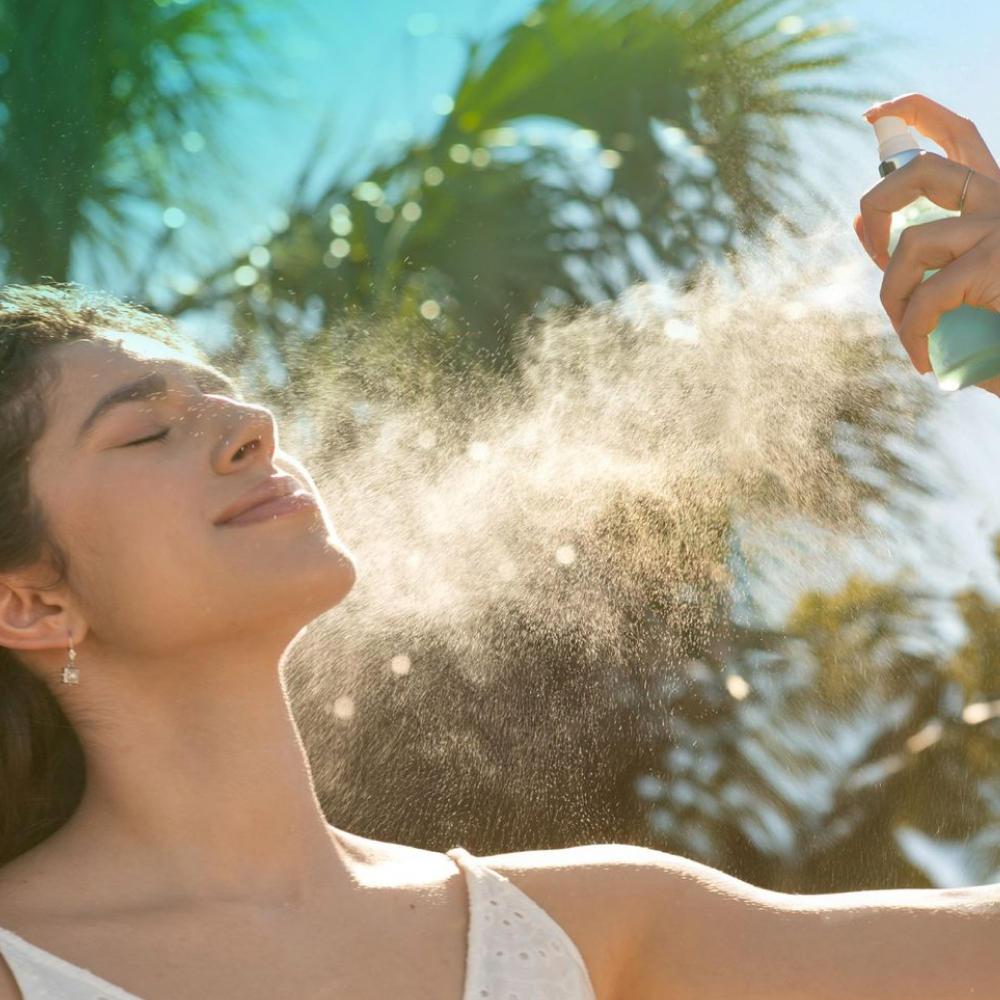

If hypochlorous acid spray sounds a little clinical and intimidating, you're not alone. It's one of those ingredients that's easy to scroll past—but probably shouldn't be. Despite the recent buzz, this isn't a new discovery at all. Hypochlorous acid is a compound your body already produces naturally, and topical versions of it have been used in wound care and medical settings for years.
So what's made it a skincare staple? The answer is simple—it's a multitasker. It clears acne, calms irritation, soothes redness, eases razor bumps and helps reactive or compromised skin get back on track, all without being harsh. In this guide, we break down what it is and help you decide whether it deserves a spot in your routine.

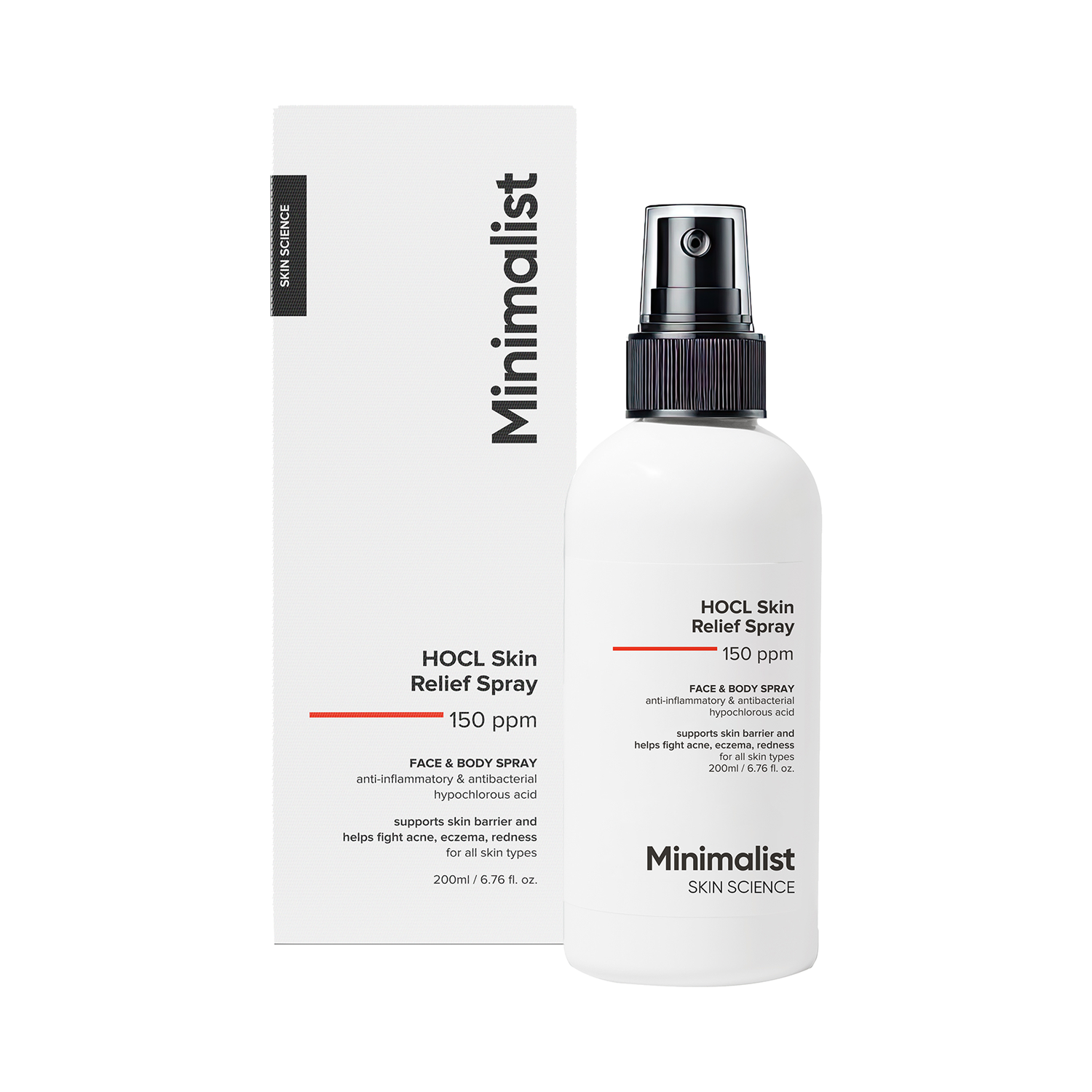
Hypochlorous acid, or HOCl, is something your body already makes. Your white blood cells produce it naturally to fight off bacteria and keep infection in check — it's essentially part of your built-in defence system. In skincare, HOCl is recreated in a lab using salt water and electricity, making it stable and gentle enough to apply directly to skin.
What's interesting is that despite feeling like a very of-the-moment ingredient, HOCl has quietly been doing its job in medical and wound care settings for a long time. Dermatologists and skincare professionals have been reaching for it for years. The rest of us are just catching on.
HOCl works in two key ways: it kills bacteria on the skin's surface and calms inflammation at the same time. These two things might sound simple, but together they cover a lot of ground. The antimicrobial action targets the bacteria that lead to clogged pores and breakouts. The anti-inflammatory effect brings down redness, heat and irritation. And because it does both gently, it tends to suit a wide range of skin types — including those that don't always get along with stronger actives.
What makes it especially easy to love is how many situations it fits into. Prone to post-workout breakouts? A quick spritz after sweating helps keep bacteria in check before it has a chance to settle in. Dealing with sensitive or reactive skin that flares up easily? HOCl calms things down without adding any additional stress to your skin. It also works beautifully after shaving or hair removal, helping to soothe razor bumps and reduce irritation in those first tender hours. And on days when your skin barrier just feels off — a little raw, a little reactive, not quite itself — it's the kind of product that quietly helps things settle.
One thing worth knowing upfront: a hypochlorous acid spray works best as a supporting player, not a lead. Think of it as something that enhances what the rest of your routine is already doing rather than replacing any of it. It's not a cleanser, a treatment or a moisturiser — it's the step that helps everything else work better.
In practice, it's very easy to use. Spritz it directly onto your face or apply it with a cotton pad right after cleansing, before your serum and moisturiser. Let it dry fully before layering anything on top. That's really all there is to it. If you're managing a persistent skin condition or are on a prescribed treatment plan, keep that going — HOCl is there to support your skin, not to replace anything your dermatologist has recommended.
The other thing that makes it so easy to incorporate is that it doesn't ask much of you. No special technique, no waiting around, no complicated steps. It just fits.
Hypochlorous acid, or HOCl, is something your body already makes. Your white blood cells produce it naturally to fight off bacteria and keep infection in check — it's essentially part of your built-in defence system. In skincare, HOCl is recreated in a lab using salt water and electricity, making it stable and gentle enough to apply directly to skin.
What's interesting is that despite feeling like a very of-the-moment ingredient, HOCl has quietly been doing its job in medical and wound care settings for a long time. Dermatologists and skincare professionals have been reaching for it for years. The rest of us are just catching on.
HOCl works in two key ways: it kills bacteria on the skin's surface and calms inflammation at the same time. These two things might sound simple, but together they cover a lot of ground. The antimicrobial action targets the bacteria that lead to clogged pores and breakouts. The anti-inflammatory effect brings down redness, heat and irritation. And because it does both gently, it tends to suit a wide range of skin types — including those that don't always get along with stronger actives.
What makes it especially easy to love is how many situations it fits into. Prone to post-workout breakouts? A quick spritz after sweating helps keep bacteria in check before it has a chance to settle in. Dealing with sensitive or reactive skin that flares up easily? HOCl calms things down without adding any additional stress to your skin. It also works beautifully after shaving or hair removal, helping to soothe razor bumps and reduce irritation in those first tender hours. And on days when your skin barrier just feels off — a little raw, a little reactive, not quite itself — it's the kind of product that quietly helps things settle.
One thing worth knowing upfront: a hypochlorous acid spray works best as a supporting player, not a lead. Think of it as something that enhances what the rest of your routine is already doing rather than replacing any of it. It's not a cleanser, a treatment or a moisturiser — it's the step that helps everything else work better.
In practice, it's very easy to use. Spritz it directly onto your face or apply it with a cotton pad right after cleansing, before your serum and moisturiser. Let it dry fully before layering anything on top. That's really all there is to it. If you're managing a persistent skin condition or are on a prescribed treatment plan, keep that going — HOCl is there to support your skin, not to replace anything your dermatologist has recommended.
The other thing that makes it so easy to incorporate is that it doesn't ask much of you. No special technique, no waiting around, no complicated steps. It just fits.


Hypochlorous acid, or HOCl, is something your body already makes. Your white blood cells produce it naturally to fight off bacteria and keep infection in check — it's essentially part of your built-in defence system. In skincare, HOCl is recreated in a lab using salt water and electricity, making it stable and gentle enough to apply directly to skin.
What's interesting is that despite feeling like a very of-the-moment ingredient, HOCl has quietly been doing its job in medical and wound care settings for a long time. Dermatologists and skincare professionals have been reaching for it for years. The rest of us are just catching on.
HOCl works in two key ways: it kills bacteria on the skin's surface and calms inflammation at the same time. These two things might sound simple, but together they cover a lot of ground. The antimicrobial action targets the bacteria that lead to clogged pores and breakouts. The anti-inflammatory effect brings down redness, heat and irritation. And because it does both gently, it tends to suit a wide range of skin types — including those that don't always get along with stronger actives.
What makes it especially easy to love is how many situations it fits into. Prone to post-workout breakouts? A quick spritz after sweating helps keep bacteria in check before it has a chance to settle in. Dealing with sensitive or reactive skin that flares up easily? HOCl calms things down without adding any additional stress to your skin. It also works beautifully after shaving or hair removal, helping to soothe razor bumps and reduce irritation in those first tender hours. And on days when your skin barrier just feels off — a little raw, a little reactive, not quite itself — it's the kind of product that quietly helps things settle.
One thing worth knowing upfront: a hypochlorous acid spray works best as a supporting player, not a lead. Think of it as something that enhances what the rest of your routine is already doing rather than replacing any of it. It's not a cleanser, a treatment or a moisturiser — it's the step that helps everything else work better.
In practice, it's very easy to use. Spritz it directly onto your face or apply it with a cotton pad right after cleansing, before your serum and moisturiser. Let it dry fully before layering anything on top. That's really all there is to it. If you're managing a persistent skin condition or are on a prescribed treatment plan, keep that going — HOCl is there to support your skin, not to replace anything your dermatologist has recommended.
The other thing that makes it so easy to incorporate is that it doesn't ask much of you. No special technique, no waiting around, no complicated steps. It just fits.