
Powder Room
A celebrity makeup artist shares her bridal trousseau essentials
Read Now


.jpg)

If you've spent any time down a skincare rabbit hole recently, chances are you've stumbled across the word spicules. Maybe it was on a serum promising glass skin, or a product claiming to deliver microneedling-like results from the comfort of your bathroom shelf. Either way, it probably made you pause—and wonder whether this is genuinely worth your attention or just another buzzy ingredient that'll fade by next season.
To decode the science and cut through the noise, we spoke to Dr Riya Thorat, aesthetic physician and GP dermatologist and one of our Expert Panellists, who breaks down what spicules actually are, how they work and whether they deserve a place in your routine. Ahead, everything you need to know.
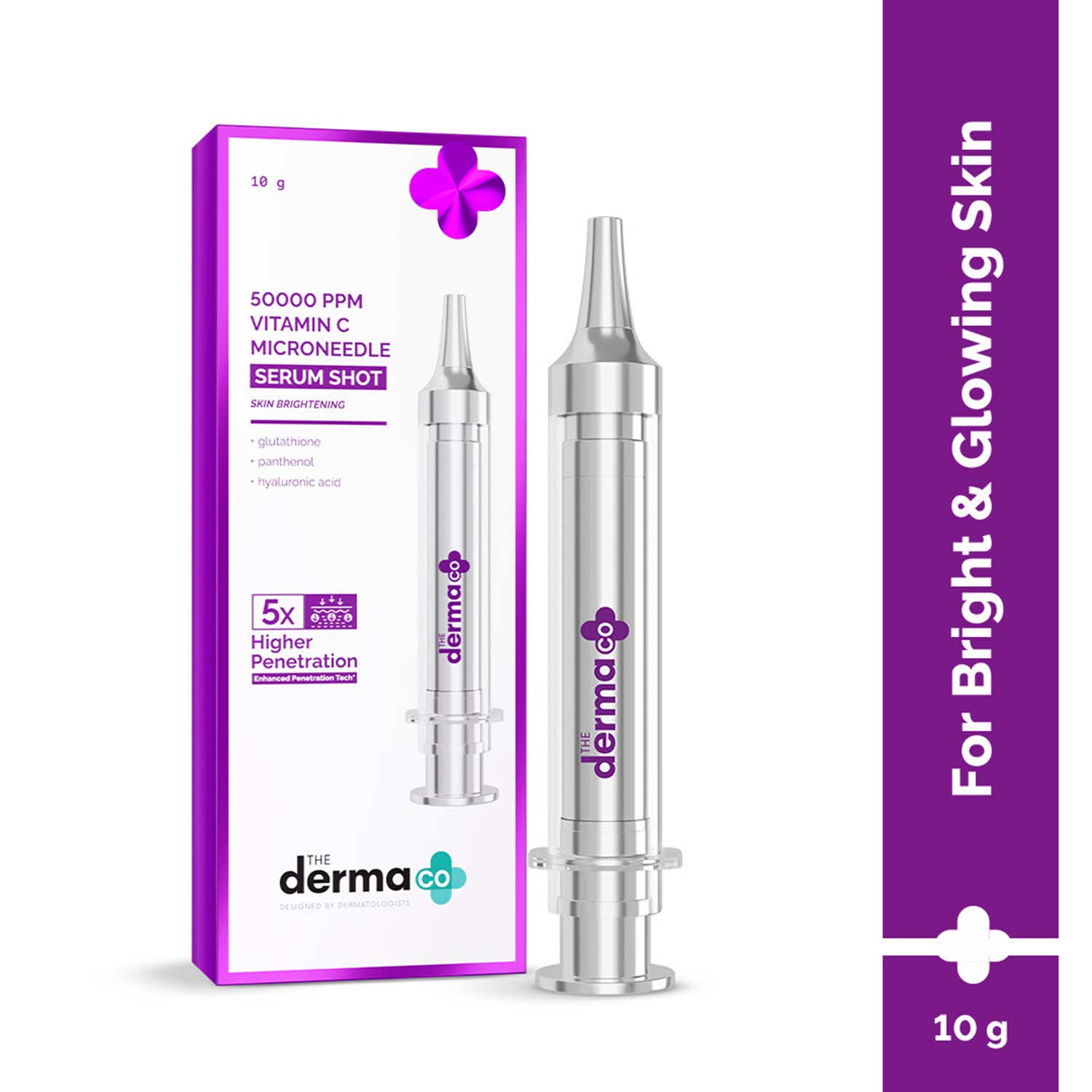
Spicules are microscopic, needle-like structures derived from marine sponges—part of the natural skeleton that gives the organism its shape and strength. In the wild, they protect the sponge from predators. In skincare, they do something far more interesting: they interact with your skin's surface in a way that kickstarts renewal from within.
The ingredient has been around in marine biology for a long time, but its entry into cosmetics is relatively recent. It first gained serious traction through K-beauty, where it became a key part of the "glass skin" movement, before spreading into mainstream skincare globally. You may also see it listed on ingredient labels as "hydrolysed sponge"—same thing, different name.
What makes spicules stand out from most exfoliants is that they don't just work on the surface. "They've been adapted for cosmetic use due to their ability to create controlled micro-stimulation in the skin," explains Dr Thorat. "This mechanism mimics certain aspects of professional procedures like microneedling—without the use of devices —making them an interesting addition to modern skincare formulations."
When a spicule-containing product is applied, the tiny structures penetrate the uppermost layers of the skin and create what are called microchannels. According to Dr Thorat, "this triggers a mild inflammatory response, which in turn stimulates collagen production and accelerates cellular turnover." Think of it as prompting your skin to repair and renew itself—the same basic mechanism that makes professional microneedling effective, just at a much gentler, more microscopic level.
The second benefit is arguably just as valuable. "These microchannels enhance the absorption of active ingredients layered alongside them, making formulations more effective," says Dr Thorat. Rather than sitting on the skin's surface, actives like hyaluronic acid or niacinamide are able to travel deeper and work harder. It's a delivery system and a treatment in one.
It's worth noting that spicules are not active ingredients themselves, their power lies in what they enable. The results you see will depend heavily on the quality of the full formulation, not the spicules alone.
Significantly, yes. Not all spicule formulations are equal, and this is one of the most important things to understand before buying. Spicules vary based on size, purity and processing technique, and those differences have a direct impact on both your experience and your results.
"Higher-grade spicules are more refined and consistent in structure, offering controlled penetration with minimal irritation," says Dr Thorat. "Lower-grade or poorly processed spicules can be uneven, potentially causing excessive irritation without delivering proportional benefits. So the quality absolutely impacts both safety and results." In other words, a cheaper or less carefully processed ingredient can cause all the discomfort of a strong treatment without any of the payoff.
When you're shopping for a spicule product, look beyond the marketing. A well-formulated product will typically pair spicules with soothing and hydrating ingredients—things like centella asiatica, ceramides or panthenol—that help calm the skin as the microchannels are being created.
Spicules are well-suited to a specific set of concerns rather than being a general-purpose fix. Dr Thorat notes they are particularly effective for acne and post-acne marks, uneven skin texture, enlarged pores and early signs of ageing. If any of those are on your radar, spicules are worth considering.
"They are best suited for individuals with resilient, non-sensitive skin who are looking for enhanced exfoliation and skin renewal," she says, adding that "those already familiar with active ingredients tend to tolerate them better." That last point matters. If your skin has never encountered a retinoid or an AHA, spicules are probably not the place to start. They're an ingredient for a skin that's already been built up, not a beginner's step.
You'll encounter spicules in two very different settings, and the experience between them is quite distinct. Professional in-clinic treatments use higher concentrations and are often combined with other procedures, which means more dramatic results but also more downtime. At-home products are milder by design, formulated for gradual, consistent improvement rather than a rapid transformation.
"If you're looking for noticeable transformation quickly, in-clinic treatments are more effective," says Dr Thorat. "For maintenance and mild concerns, at-home options are sufficient." It's also worth knowing that while spicules are often compared to microneedling, the two are not the same thing. Traditional microneedling is a far more precise, controlled procedure that targets deeper layers of the skin. Spicules work more superficially, which is precisely what makes them suitable for home use.
The first thing most people notice is a tingling or prickling sensation during and after application. "That's completely normal," Dr Thorat confirms. Mild redness can follow and may last anywhere from a few hours to a day. Over the next few days, you might notice some slight dryness or flaking before the skin starts to visibly smooth out and brighten.
Downtime with at-home products is minimal. Stronger in-clinic treatments may require two to three days of recovery. Either way, the changes are cumulative rather than immediate, and this is where one of the most persistent myths around spicules falls apart. "Results are cumulative and require consistency," says Dr Thorat. Treating spicules like a quick fix will only lead to overuse and irritation.
Spicules should be used sparingly—once or twice a week is a sensible starting point for most people, and it's always worth doing a patch test first. Apply to clean skin before your other actives, pressing gently rather than rubbing, and follow with hydrating and barrier-supportive ingredients.
Dr Thorat recommends pairing spicules with hydrating ingredients like hyaluronic acid and ceramides, along with "gentle soothing agents like panthenol or centella asiatica" to support the skin as it responds to the treatment. What to avoid on the same day is equally important. "Strong acids, retinoids and other exfoliating treatments should not be combined with spicules on the same day," she advises. Layering too many stimulating ingredients at once is one of the most common mistakes people make, and it's what turns a useful treatment into an irritating one.
Sun protection is also non-negotiable. "Sun protection is essential when using spicules," Dr Thorat emphasises. Any ingredient that increases cellular turnover leaves the skin more vulnerable to UV damage, and skipping SPF while using spicules simply isn't an option.
Spicules are genuinely effective—but they are not for everyone, and it's important to know where the line is. Dr Thorat advises that anyone with sensitive or reactive skin, active rosacea or eczema, a compromised skin barrier, open wounds or active infections should avoid spicules entirely. The micro-stimulation that makes them beneficial for resilient skin will only amplify inflammation in skin that is already reactive.
There are also a couple of myths she wants to put to rest. The first is the idea that more tingling equals better results. "Excessive irritation can damage the skin barrier," she explains—so if your skin is burning rather than mildly prickling, that is a sign to stop, not push through. The second myth is that spicules are a replacement for professional treatments. "They're not. They're a milder, supportive alternative," says Dr Thorat—useful in their own right but not a substitute for clinical-grade results when that's genuinely what your skin needs.
Used correctly, introduced slowly and paired with the right supporting ingredients, spicules can be a genuinely worthwhile addition to a considered routine. The key, as always, is knowing whether they're right for your skin before you reach for them.
Spicules are microscopic, needle-like structures derived from marine sponges—part of the natural skeleton that gives the organism its shape and strength. In the wild, they protect the sponge from predators. In skincare, they do something far more interesting: they interact with your skin's surface in a way that kickstarts renewal from within.
The ingredient has been around in marine biology for a long time, but its entry into cosmetics is relatively recent. It first gained serious traction through K-beauty, where it became a key part of the "glass skin" movement, before spreading into mainstream skincare globally. You may also see it listed on ingredient labels as "hydrolysed sponge"—same thing, different name.
What makes spicules stand out from most exfoliants is that they don't just work on the surface. "They've been adapted for cosmetic use due to their ability to create controlled micro-stimulation in the skin," explains Dr Thorat. "This mechanism mimics certain aspects of professional procedures like microneedling—without the use of devices —making them an interesting addition to modern skincare formulations."
When a spicule-containing product is applied, the tiny structures penetrate the uppermost layers of the skin and create what are called microchannels. According to Dr Thorat, "this triggers a mild inflammatory response, which in turn stimulates collagen production and accelerates cellular turnover." Think of it as prompting your skin to repair and renew itself—the same basic mechanism that makes professional microneedling effective, just at a much gentler, more microscopic level.
The second benefit is arguably just as valuable. "These microchannels enhance the absorption of active ingredients layered alongside them, making formulations more effective," says Dr Thorat. Rather than sitting on the skin's surface, actives like hyaluronic acid or niacinamide are able to travel deeper and work harder. It's a delivery system and a treatment in one.
It's worth noting that spicules are not active ingredients themselves, their power lies in what they enable. The results you see will depend heavily on the quality of the full formulation, not the spicules alone.
Significantly, yes. Not all spicule formulations are equal, and this is one of the most important things to understand before buying. Spicules vary based on size, purity and processing technique, and those differences have a direct impact on both your experience and your results.
"Higher-grade spicules are more refined and consistent in structure, offering controlled penetration with minimal irritation," says Dr Thorat. "Lower-grade or poorly processed spicules can be uneven, potentially causing excessive irritation without delivering proportional benefits. So the quality absolutely impacts both safety and results." In other words, a cheaper or less carefully processed ingredient can cause all the discomfort of a strong treatment without any of the payoff.
When you're shopping for a spicule product, look beyond the marketing. A well-formulated product will typically pair spicules with soothing and hydrating ingredients—things like centella asiatica, ceramides or panthenol—that help calm the skin as the microchannels are being created.
Spicules are well-suited to a specific set of concerns rather than being a general-purpose fix. Dr Thorat notes they are particularly effective for acne and post-acne marks, uneven skin texture, enlarged pores and early signs of ageing. If any of those are on your radar, spicules are worth considering.
"They are best suited for individuals with resilient, non-sensitive skin who are looking for enhanced exfoliation and skin renewal," she says, adding that "those already familiar with active ingredients tend to tolerate them better." That last point matters. If your skin has never encountered a retinoid or an AHA, spicules are probably not the place to start. They're an ingredient for a skin that's already been built up, not a beginner's step.
You'll encounter spicules in two very different settings, and the experience between them is quite distinct. Professional in-clinic treatments use higher concentrations and are often combined with other procedures, which means more dramatic results but also more downtime. At-home products are milder by design, formulated for gradual, consistent improvement rather than a rapid transformation.
"If you're looking for noticeable transformation quickly, in-clinic treatments are more effective," says Dr Thorat. "For maintenance and mild concerns, at-home options are sufficient." It's also worth knowing that while spicules are often compared to microneedling, the two are not the same thing. Traditional microneedling is a far more precise, controlled procedure that targets deeper layers of the skin. Spicules work more superficially, which is precisely what makes them suitable for home use.
The first thing most people notice is a tingling or prickling sensation during and after application. "That's completely normal," Dr Thorat confirms. Mild redness can follow and may last anywhere from a few hours to a day. Over the next few days, you might notice some slight dryness or flaking before the skin starts to visibly smooth out and brighten.
Downtime with at-home products is minimal. Stronger in-clinic treatments may require two to three days of recovery. Either way, the changes are cumulative rather than immediate, and this is where one of the most persistent myths around spicules falls apart. "Results are cumulative and require consistency," says Dr Thorat. Treating spicules like a quick fix will only lead to overuse and irritation.
Spicules should be used sparingly—once or twice a week is a sensible starting point for most people, and it's always worth doing a patch test first. Apply to clean skin before your other actives, pressing gently rather than rubbing, and follow with hydrating and barrier-supportive ingredients.
Dr Thorat recommends pairing spicules with hydrating ingredients like hyaluronic acid and ceramides, along with "gentle soothing agents like panthenol or centella asiatica" to support the skin as it responds to the treatment. What to avoid on the same day is equally important. "Strong acids, retinoids and other exfoliating treatments should not be combined with spicules on the same day," she advises. Layering too many stimulating ingredients at once is one of the most common mistakes people make, and it's what turns a useful treatment into an irritating one.
Sun protection is also non-negotiable. "Sun protection is essential when using spicules," Dr Thorat emphasises. Any ingredient that increases cellular turnover leaves the skin more vulnerable to UV damage, and skipping SPF while using spicules simply isn't an option.
Spicules are genuinely effective—but they are not for everyone, and it's important to know where the line is. Dr Thorat advises that anyone with sensitive or reactive skin, active rosacea or eczema, a compromised skin barrier, open wounds or active infections should avoid spicules entirely. The micro-stimulation that makes them beneficial for resilient skin will only amplify inflammation in skin that is already reactive.
There are also a couple of myths she wants to put to rest. The first is the idea that more tingling equals better results. "Excessive irritation can damage the skin barrier," she explains—so if your skin is burning rather than mildly prickling, that is a sign to stop, not push through. The second myth is that spicules are a replacement for professional treatments. "They're not. They're a milder, supportive alternative," says Dr Thorat—useful in their own right but not a substitute for clinical-grade results when that's genuinely what your skin needs.
Used correctly, introduced slowly and paired with the right supporting ingredients, spicules can be a genuinely worthwhile addition to a considered routine. The key, as always, is knowing whether they're right for your skin before you reach for them.


Spicules are microscopic, needle-like structures derived from marine sponges—part of the natural skeleton that gives the organism its shape and strength. In the wild, they protect the sponge from predators. In skincare, they do something far more interesting: they interact with your skin's surface in a way that kickstarts renewal from within.
The ingredient has been around in marine biology for a long time, but its entry into cosmetics is relatively recent. It first gained serious traction through K-beauty, where it became a key part of the "glass skin" movement, before spreading into mainstream skincare globally. You may also see it listed on ingredient labels as "hydrolysed sponge"—same thing, different name.
What makes spicules stand out from most exfoliants is that they don't just work on the surface. "They've been adapted for cosmetic use due to their ability to create controlled micro-stimulation in the skin," explains Dr Thorat. "This mechanism mimics certain aspects of professional procedures like microneedling—without the use of devices —making them an interesting addition to modern skincare formulations."
When a spicule-containing product is applied, the tiny structures penetrate the uppermost layers of the skin and create what are called microchannels. According to Dr Thorat, "this triggers a mild inflammatory response, which in turn stimulates collagen production and accelerates cellular turnover." Think of it as prompting your skin to repair and renew itself—the same basic mechanism that makes professional microneedling effective, just at a much gentler, more microscopic level.
The second benefit is arguably just as valuable. "These microchannels enhance the absorption of active ingredients layered alongside them, making formulations more effective," says Dr Thorat. Rather than sitting on the skin's surface, actives like hyaluronic acid or niacinamide are able to travel deeper and work harder. It's a delivery system and a treatment in one.
It's worth noting that spicules are not active ingredients themselves, their power lies in what they enable. The results you see will depend heavily on the quality of the full formulation, not the spicules alone.
Significantly, yes. Not all spicule formulations are equal, and this is one of the most important things to understand before buying. Spicules vary based on size, purity and processing technique, and those differences have a direct impact on both your experience and your results.
"Higher-grade spicules are more refined and consistent in structure, offering controlled penetration with minimal irritation," says Dr Thorat. "Lower-grade or poorly processed spicules can be uneven, potentially causing excessive irritation without delivering proportional benefits. So the quality absolutely impacts both safety and results." In other words, a cheaper or less carefully processed ingredient can cause all the discomfort of a strong treatment without any of the payoff.
When you're shopping for a spicule product, look beyond the marketing. A well-formulated product will typically pair spicules with soothing and hydrating ingredients—things like centella asiatica, ceramides or panthenol—that help calm the skin as the microchannels are being created.
Spicules are well-suited to a specific set of concerns rather than being a general-purpose fix. Dr Thorat notes they are particularly effective for acne and post-acne marks, uneven skin texture, enlarged pores and early signs of ageing. If any of those are on your radar, spicules are worth considering.
"They are best suited for individuals with resilient, non-sensitive skin who are looking for enhanced exfoliation and skin renewal," she says, adding that "those already familiar with active ingredients tend to tolerate them better." That last point matters. If your skin has never encountered a retinoid or an AHA, spicules are probably not the place to start. They're an ingredient for a skin that's already been built up, not a beginner's step.
You'll encounter spicules in two very different settings, and the experience between them is quite distinct. Professional in-clinic treatments use higher concentrations and are often combined with other procedures, which means more dramatic results but also more downtime. At-home products are milder by design, formulated for gradual, consistent improvement rather than a rapid transformation.
"If you're looking for noticeable transformation quickly, in-clinic treatments are more effective," says Dr Thorat. "For maintenance and mild concerns, at-home options are sufficient." It's also worth knowing that while spicules are often compared to microneedling, the two are not the same thing. Traditional microneedling is a far more precise, controlled procedure that targets deeper layers of the skin. Spicules work more superficially, which is precisely what makes them suitable for home use.
The first thing most people notice is a tingling or prickling sensation during and after application. "That's completely normal," Dr Thorat confirms. Mild redness can follow and may last anywhere from a few hours to a day. Over the next few days, you might notice some slight dryness or flaking before the skin starts to visibly smooth out and brighten.
Downtime with at-home products is minimal. Stronger in-clinic treatments may require two to three days of recovery. Either way, the changes are cumulative rather than immediate, and this is where one of the most persistent myths around spicules falls apart. "Results are cumulative and require consistency," says Dr Thorat. Treating spicules like a quick fix will only lead to overuse and irritation.
Spicules should be used sparingly—once or twice a week is a sensible starting point for most people, and it's always worth doing a patch test first. Apply to clean skin before your other actives, pressing gently rather than rubbing, and follow with hydrating and barrier-supportive ingredients.
Dr Thorat recommends pairing spicules with hydrating ingredients like hyaluronic acid and ceramides, along with "gentle soothing agents like panthenol or centella asiatica" to support the skin as it responds to the treatment. What to avoid on the same day is equally important. "Strong acids, retinoids and other exfoliating treatments should not be combined with spicules on the same day," she advises. Layering too many stimulating ingredients at once is one of the most common mistakes people make, and it's what turns a useful treatment into an irritating one.
Sun protection is also non-negotiable. "Sun protection is essential when using spicules," Dr Thorat emphasises. Any ingredient that increases cellular turnover leaves the skin more vulnerable to UV damage, and skipping SPF while using spicules simply isn't an option.
Spicules are genuinely effective—but they are not for everyone, and it's important to know where the line is. Dr Thorat advises that anyone with sensitive or reactive skin, active rosacea or eczema, a compromised skin barrier, open wounds or active infections should avoid spicules entirely. The micro-stimulation that makes them beneficial for resilient skin will only amplify inflammation in skin that is already reactive.
There are also a couple of myths she wants to put to rest. The first is the idea that more tingling equals better results. "Excessive irritation can damage the skin barrier," she explains—so if your skin is burning rather than mildly prickling, that is a sign to stop, not push through. The second myth is that spicules are a replacement for professional treatments. "They're not. They're a milder, supportive alternative," says Dr Thorat—useful in their own right but not a substitute for clinical-grade results when that's genuinely what your skin needs.
Used correctly, introduced slowly and paired with the right supporting ingredients, spicules can be a genuinely worthwhile addition to a considered routine. The key, as always, is knowing whether they're right for your skin before you reach for them.