

Ingredient Lab
8 ingredients to know if your hair is thinning in your 30s
Read Now


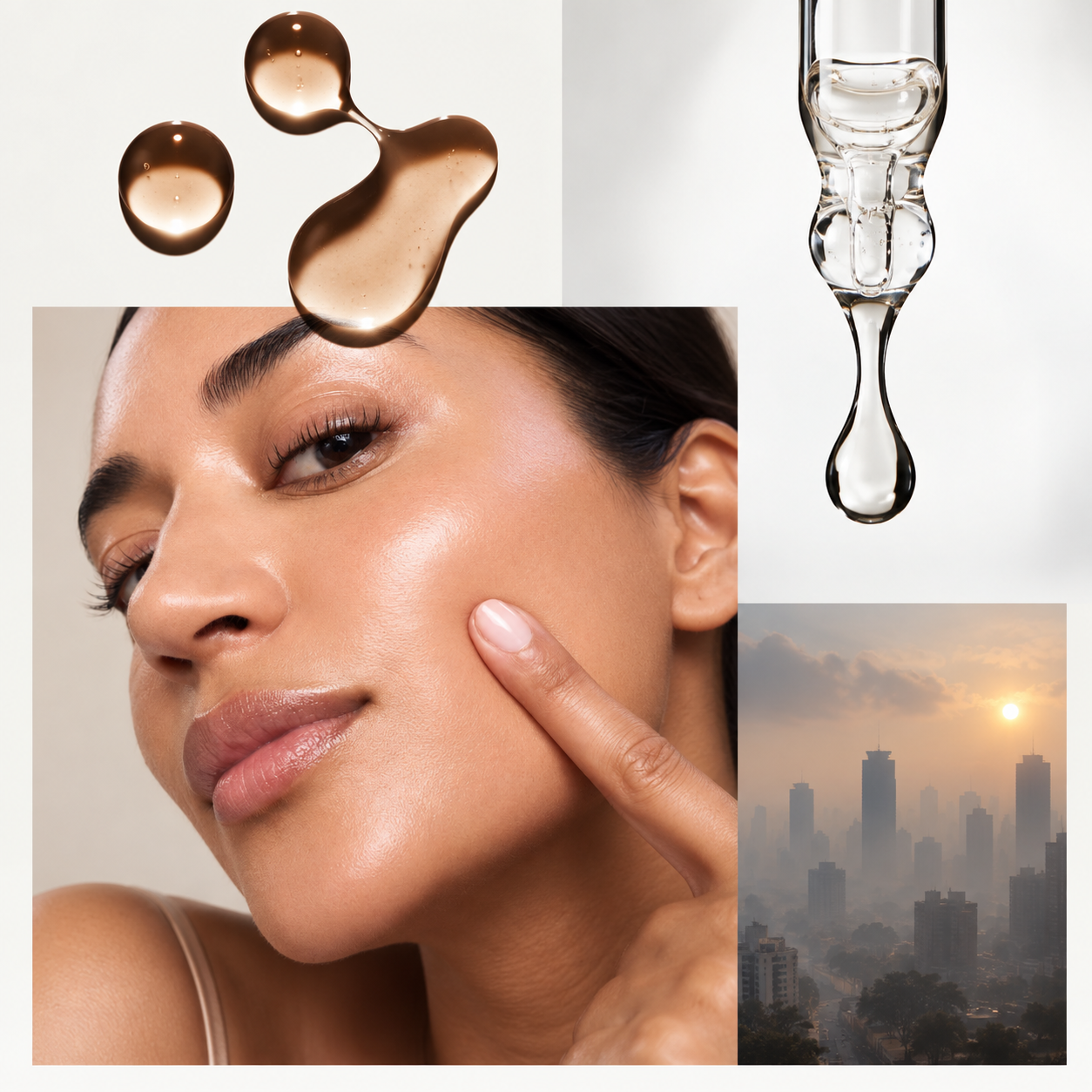

There was a time when protecting your skin largely meant wearing sunscreen and calling it a day. But now, our skin has much more to contend with. Pollution, UV exposure, fluctuating temperatures and everyday environmental stressors can all affect the skin and its protective barrier. Naturally, skincare is beginning to focus on defending as well as repairing.
Enter ectoin, an ingredient that has been used in skincare for years but is now finding its way into the spotlight. Originally found in microorganisms that produce it to survive harsh environmental conditions, ectoin is an extremolyte known for its protective and hydrating properties. In skincare, research suggests it can help support the skin barrier, improve hydration and protect against some forms of environmental stress.
That makes its growing reputation as an anti-pollution active particularly interesting. While research into ectoin's specific role in protecting human skin from real-world pollution is still developing, its ability to support hydration and barrier function makes it relevant to the broader conversation around environmental skin stress. Rather than another buzzy active to squeeze into an already crowded routine, think of ectoin as an ingredient designed to help skin become a little more resilient to what it encounters every day.
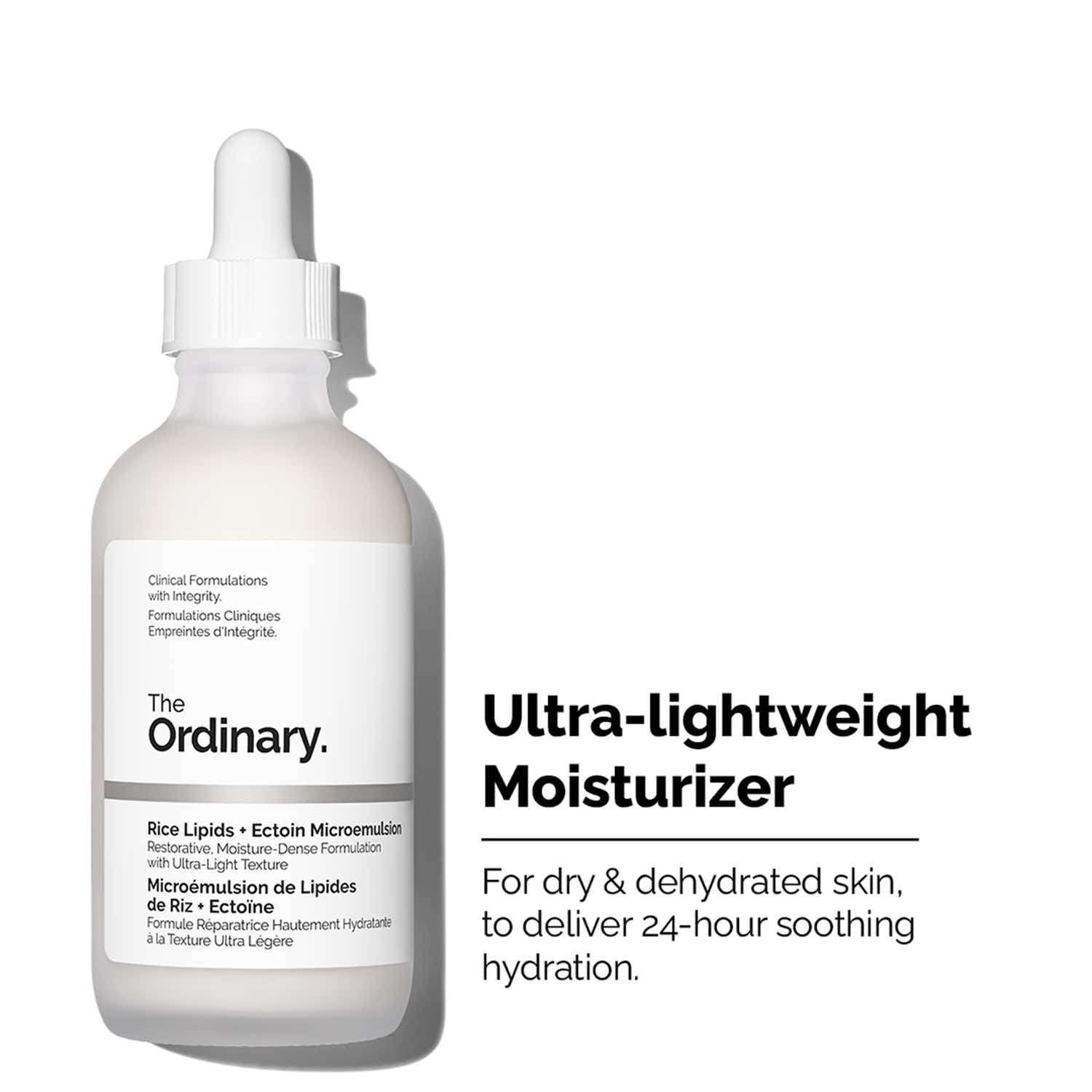
Ectoin helps support skin hydration and barrier function. Its water-binding properties make it particularly useful for dry, dehydrated, sensitive or environmentally stressed skin.
Ectoin can help support skin exposed to environmental stress by maintaining hydration and barrier function. However, research specifically proving that topical ectoin protects human skin from real-world air pollution is still developing.
Yes, ectoin is commonly found in formulas for sensitive and compromised skin. Research on ectoin-containing products suggests it can help with dryness and impaired barrier function.
Yes, ectoin can generally be used daily, both morning and evening. How often you use it will depend on the formulation and directions of the individual skincare product.
Yes, ectoin can generally be used alongside retinoids and vitamin C. Its hydrating and barrier-supporting properties also make it a useful addition to routines containing stronger actives.
So, we know ectoin can help skin deal with environmental stress. But how does it actually do that?
A lot of it comes down to water. Ectoin has a strong affinity for water molecules, helping create what researchers describe as a hydration shell around proteins and cell membranes. This helps keep these structures stable when conditions around them become less than ideal.
In skincare terms, that makes ectoin quite different from many of the actives we’re used to. It isn’t exfoliating the surface or speeding up cell turnover. Instead, it works more like a support system, helping maintain the conditions skin needs to function well. Research into ectoin-containing formulas has shown promising results for moisturisation and transepidermal water loss (TEWL), which is essentially the water that escapes through the skin.
It’s a less dramatic approach to skincare, perhaps, but that’s also the point. Ectoin isn’t about pushing skin to do more; it’s about helping it cope better with what it already encounters.
Quite a bit, although this is where the terminology needs some unpacking. “Anti-pollution” can make it sound as though an ingredient creates a physical shield that keeps dirty air away from your face. Ectoin doesn’t quite work like that.
Air pollution includes a complex mix of substances, including particulate matter and gases such as ozone, and research has linked exposure to some pollutants with oxidative stress, inflammation and changes in normal skin function. Your skin has its own protective mechanisms, but repeated exposure to environmental stress can make maintaining a healthy barrier all the more important.
This is where ectoin’s protective properties become relevant. Rather than neutralising every pollutant or preventing particles from ever reaching the skin, ectoin helps support the cellular structures and hydration processes that allow skin to better withstand stress. Research has explored its protective effects against several environmental stressors, although direct clinical evidence specifically showing that topical ectoin protects human skin from real-world air pollution is still developing.
So, it’s worth thinking of ectoin as part of an anti-pollution routine rather than the anti-pollution solution. Cleansing still matters. Sunscreen is non-negotiable for UV protection. Antioxidants have their own role to play. Ectoin simply brings another piece to the puzzle: helping support skin while the outside world gets on with being the outside world.
Beyond its anti-pollution credentials, ectoin has a few benefits that make it useful even if environmental protection isn’t at the top of your skincare agenda.
If your skin starts the morning comfortable and feels noticeably drier by the afternoon, ectoin may be worth looking out for. Its affinity for water is central to how it works, and research on ectoin-containing formulations has found improvements in skin moisture. That makes it particularly relevant for dehydrated skin or routines focused on maintaining moisture rather than simply adding another rich layer on top.
When the barrier isn’t functioning at its best, water can escape more readily, often leaving skin feeling dry, tight or uncomfortable. Studies involving ectoin-containing formulations have reported improvements in TEWL, a commonly used measure of barrier function. It won’t rebuild an unhappy barrier overnight, but it can be a useful supporting ingredient in a routine designed to get skin back to a more comfortable place.
One reason ectoin has become particularly interesting for sensitive-skin formulas is that it has also been studied in people with compromised and inflammation-prone skin. A systematic review of topical ectoin found encouraging results in conditions involving impaired barrier function, including atopic dermatitis, although the available clinical research remains limited.
For everyday skincare, the takeaway is simpler: ectoin can be a useful ingredient when your goal is to keep easily stressed skin hydrated and comfortable, rather than introducing another highly active step.
Ectoin hasn’t suddenly appeared out of nowhere. What has changed is the kind of skincare we’re interested in.
After years of acids, peels, retinoids and elaborate active stacking, the conversation has shifted towards protecting what we already have. Barrier care has become a category in its own right, “skin resilience” is entering the beauty vocabulary and environmental exposure is increasingly part of the conversation around how our skin behaves.
Ectoin happens to fit neatly into all three.
There’s also something refreshingly uncomplicated about it. You don’t need an ectoin night, a complicated cycling schedule or a mental spreadsheet of ingredients it shouldn’t meet. It can simply sit within a well-rounded routine and do what it does best.
That doesn’t make it a miracle ingredient, nor does the emerging research around environmental protection mean we should start treating it as a pollution-proof coating for skin. Its appeal is quieter than that. At a time when skincare is becoming less about constantly correcting skin and more about helping it stay resilient in the first place, ectoin feels remarkably well suited to the moment.
So, we know ectoin can help skin deal with environmental stress. But how does it actually do that?
A lot of it comes down to water. Ectoin has a strong affinity for water molecules, helping create what researchers describe as a hydration shell around proteins and cell membranes. This helps keep these structures stable when conditions around them become less than ideal.
In skincare terms, that makes ectoin quite different from many of the actives we’re used to. It isn’t exfoliating the surface or speeding up cell turnover. Instead, it works more like a support system, helping maintain the conditions skin needs to function well. Research into ectoin-containing formulas has shown promising results for moisturisation and transepidermal water loss (TEWL), which is essentially the water that escapes through the skin.
It’s a less dramatic approach to skincare, perhaps, but that’s also the point. Ectoin isn’t about pushing skin to do more; it’s about helping it cope better with what it already encounters.
Quite a bit, although this is where the terminology needs some unpacking. “Anti-pollution” can make it sound as though an ingredient creates a physical shield that keeps dirty air away from your face. Ectoin doesn’t quite work like that.
Air pollution includes a complex mix of substances, including particulate matter and gases such as ozone, and research has linked exposure to some pollutants with oxidative stress, inflammation and changes in normal skin function. Your skin has its own protective mechanisms, but repeated exposure to environmental stress can make maintaining a healthy barrier all the more important.
This is where ectoin’s protective properties become relevant. Rather than neutralising every pollutant or preventing particles from ever reaching the skin, ectoin helps support the cellular structures and hydration processes that allow skin to better withstand stress. Research has explored its protective effects against several environmental stressors, although direct clinical evidence specifically showing that topical ectoin protects human skin from real-world air pollution is still developing.
So, it’s worth thinking of ectoin as part of an anti-pollution routine rather than the anti-pollution solution. Cleansing still matters. Sunscreen is non-negotiable for UV protection. Antioxidants have their own role to play. Ectoin simply brings another piece to the puzzle: helping support skin while the outside world gets on with being the outside world.
Beyond its anti-pollution credentials, ectoin has a few benefits that make it useful even if environmental protection isn’t at the top of your skincare agenda.
If your skin starts the morning comfortable and feels noticeably drier by the afternoon, ectoin may be worth looking out for. Its affinity for water is central to how it works, and research on ectoin-containing formulations has found improvements in skin moisture. That makes it particularly relevant for dehydrated skin or routines focused on maintaining moisture rather than simply adding another rich layer on top.
When the barrier isn’t functioning at its best, water can escape more readily, often leaving skin feeling dry, tight or uncomfortable. Studies involving ectoin-containing formulations have reported improvements in TEWL, a commonly used measure of barrier function. It won’t rebuild an unhappy barrier overnight, but it can be a useful supporting ingredient in a routine designed to get skin back to a more comfortable place.
One reason ectoin has become particularly interesting for sensitive-skin formulas is that it has also been studied in people with compromised and inflammation-prone skin. A systematic review of topical ectoin found encouraging results in conditions involving impaired barrier function, including atopic dermatitis, although the available clinical research remains limited.
For everyday skincare, the takeaway is simpler: ectoin can be a useful ingredient when your goal is to keep easily stressed skin hydrated and comfortable, rather than introducing another highly active step.
Ectoin hasn’t suddenly appeared out of nowhere. What has changed is the kind of skincare we’re interested in.
After years of acids, peels, retinoids and elaborate active stacking, the conversation has shifted towards protecting what we already have. Barrier care has become a category in its own right, “skin resilience” is entering the beauty vocabulary and environmental exposure is increasingly part of the conversation around how our skin behaves.
Ectoin happens to fit neatly into all three.
There’s also something refreshingly uncomplicated about it. You don’t need an ectoin night, a complicated cycling schedule or a mental spreadsheet of ingredients it shouldn’t meet. It can simply sit within a well-rounded routine and do what it does best.
That doesn’t make it a miracle ingredient, nor does the emerging research around environmental protection mean we should start treating it as a pollution-proof coating for skin. Its appeal is quieter than that. At a time when skincare is becoming less about constantly correcting skin and more about helping it stay resilient in the first place, ectoin feels remarkably well suited to the moment.
Ectoin helps support skin hydration and barrier function. Its water-binding properties make it particularly useful for dry, dehydrated, sensitive or environmentally stressed skin.
Ectoin can help support skin exposed to environmental stress by maintaining hydration and barrier function. However, research specifically proving that topical ectoin protects human skin from real-world air pollution is still developing.
Yes, ectoin is commonly found in formulas for sensitive and compromised skin. Research on ectoin-containing products suggests it can help with dryness and impaired barrier function.
Yes, ectoin can generally be used daily, both morning and evening. How often you use it will depend on the formulation and directions of the individual skincare product.
Yes, ectoin can generally be used alongside retinoids and vitamin C. Its hydrating and barrier-supporting properties also make it a useful addition to routines containing stronger actives.


Ectoin helps support skin hydration and barrier function. Its water-binding properties make it particularly useful for dry, dehydrated, sensitive or environmentally stressed skin.
Ectoin can help support skin exposed to environmental stress by maintaining hydration and barrier function. However, research specifically proving that topical ectoin protects human skin from real-world air pollution is still developing.
Yes, ectoin is commonly found in formulas for sensitive and compromised skin. Research on ectoin-containing products suggests it can help with dryness and impaired barrier function.
Yes, ectoin can generally be used daily, both morning and evening. How often you use it will depend on the formulation and directions of the individual skincare product.
Yes, ectoin can generally be used alongside retinoids and vitamin C. Its hydrating and barrier-supporting properties also make it a useful addition to routines containing stronger actives.
So, we know ectoin can help skin deal with environmental stress. But how does it actually do that?
A lot of it comes down to water. Ectoin has a strong affinity for water molecules, helping create what researchers describe as a hydration shell around proteins and cell membranes. This helps keep these structures stable when conditions around them become less than ideal.
In skincare terms, that makes ectoin quite different from many of the actives we’re used to. It isn’t exfoliating the surface or speeding up cell turnover. Instead, it works more like a support system, helping maintain the conditions skin needs to function well. Research into ectoin-containing formulas has shown promising results for moisturisation and transepidermal water loss (TEWL), which is essentially the water that escapes through the skin.
It’s a less dramatic approach to skincare, perhaps, but that’s also the point. Ectoin isn’t about pushing skin to do more; it’s about helping it cope better with what it already encounters.
Quite a bit, although this is where the terminology needs some unpacking. “Anti-pollution” can make it sound as though an ingredient creates a physical shield that keeps dirty air away from your face. Ectoin doesn’t quite work like that.
Air pollution includes a complex mix of substances, including particulate matter and gases such as ozone, and research has linked exposure to some pollutants with oxidative stress, inflammation and changes in normal skin function. Your skin has its own protective mechanisms, but repeated exposure to environmental stress can make maintaining a healthy barrier all the more important.
This is where ectoin’s protective properties become relevant. Rather than neutralising every pollutant or preventing particles from ever reaching the skin, ectoin helps support the cellular structures and hydration processes that allow skin to better withstand stress. Research has explored its protective effects against several environmental stressors, although direct clinical evidence specifically showing that topical ectoin protects human skin from real-world air pollution is still developing.
So, it’s worth thinking of ectoin as part of an anti-pollution routine rather than the anti-pollution solution. Cleansing still matters. Sunscreen is non-negotiable for UV protection. Antioxidants have their own role to play. Ectoin simply brings another piece to the puzzle: helping support skin while the outside world gets on with being the outside world.
Beyond its anti-pollution credentials, ectoin has a few benefits that make it useful even if environmental protection isn’t at the top of your skincare agenda.
If your skin starts the morning comfortable and feels noticeably drier by the afternoon, ectoin may be worth looking out for. Its affinity for water is central to how it works, and research on ectoin-containing formulations has found improvements in skin moisture. That makes it particularly relevant for dehydrated skin or routines focused on maintaining moisture rather than simply adding another rich layer on top.
When the barrier isn’t functioning at its best, water can escape more readily, often leaving skin feeling dry, tight or uncomfortable. Studies involving ectoin-containing formulations have reported improvements in TEWL, a commonly used measure of barrier function. It won’t rebuild an unhappy barrier overnight, but it can be a useful supporting ingredient in a routine designed to get skin back to a more comfortable place.
One reason ectoin has become particularly interesting for sensitive-skin formulas is that it has also been studied in people with compromised and inflammation-prone skin. A systematic review of topical ectoin found encouraging results in conditions involving impaired barrier function, including atopic dermatitis, although the available clinical research remains limited.
For everyday skincare, the takeaway is simpler: ectoin can be a useful ingredient when your goal is to keep easily stressed skin hydrated and comfortable, rather than introducing another highly active step.
Ectoin hasn’t suddenly appeared out of nowhere. What has changed is the kind of skincare we’re interested in.
After years of acids, peels, retinoids and elaborate active stacking, the conversation has shifted towards protecting what we already have. Barrier care has become a category in its own right, “skin resilience” is entering the beauty vocabulary and environmental exposure is increasingly part of the conversation around how our skin behaves.
Ectoin happens to fit neatly into all three.
There’s also something refreshingly uncomplicated about it. You don’t need an ectoin night, a complicated cycling schedule or a mental spreadsheet of ingredients it shouldn’t meet. It can simply sit within a well-rounded routine and do what it does best.
That doesn’t make it a miracle ingredient, nor does the emerging research around environmental protection mean we should start treating it as a pollution-proof coating for skin. Its appeal is quieter than that. At a time when skincare is becoming less about constantly correcting skin and more about helping it stay resilient in the first place, ectoin feels remarkably well suited to the moment.
Ectoin helps support skin hydration and barrier function. Its water-binding properties make it particularly useful for dry, dehydrated, sensitive or environmentally stressed skin.
Ectoin can help support skin exposed to environmental stress by maintaining hydration and barrier function. However, research specifically proving that topical ectoin protects human skin from real-world air pollution is still developing.
Yes, ectoin is commonly found in formulas for sensitive and compromised skin. Research on ectoin-containing products suggests it can help with dryness and impaired barrier function.
Yes, ectoin can generally be used daily, both morning and evening. How often you use it will depend on the formulation and directions of the individual skincare product.
Yes, ectoin can generally be used alongside retinoids and vitamin C. Its hydrating and barrier-supporting properties also make it a useful addition to routines containing stronger actives.