Ingredient Lab
What’s really happening when an ingredient is “fermented”
Read Now


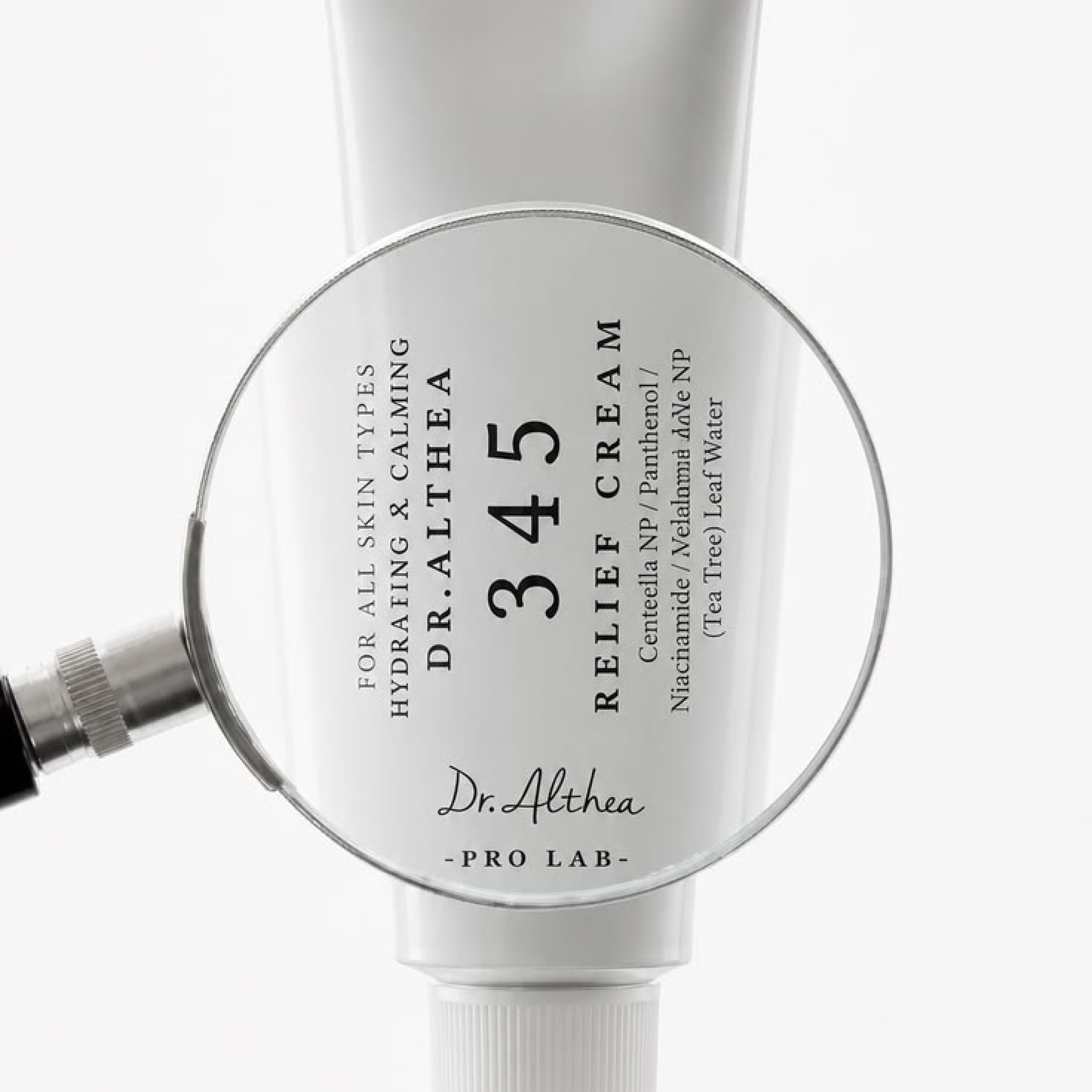

Nobody reads the back of the bottle for fun. You read it when your skin has broken out and you’re trying to work out why, or when something cost quite a lot and you want to see what you paid for, or when you’re standing in an aisle holding two serums that make more or less the same promise.
And then the list defeats you, because it wasn’t written with you in mind. It’s an INCI list, International Nomenclature of Cosmetic Ingredients, and its job is to stay consistent across borders so a regulator in Delhi and a regulator in Dublin are looking at identical words. There is a logic to it though, and most of it is about position rather than vocabulary.
India’s Cosmetics Rules, 2020 require anything above 1% to appear in descending order of weight. Below 1%, a brand can list things in whatever order it fancies. So the top of the list is ranked and the bottom isn’t. Once you know that, the first five ingredients will tell you what the product fundamentally is.
Aqua sits at the top of almost every serum and cream you own. That’s not a brand cutting corners; water is what the rest of the formula dissolves into. It’s the next few that are worth your attention. Glycerin at number two usually means hydration is the whole point. A silicone or a thick butter that high up and you can predict the texture before you’ve opened the lid: heavier, slower to sink in, better in winter than in summer.
Here’s the frustrating part. Below 1% nothing is ranked, so a brand can drop its headline active anywhere in that stretch. Which is how you end up with a serum named after an ingredient that’s present in fairly small amounts.
There’s a workaround. Look for phenoxyethanol. It’s a common preservative, EU and UK regulators cap it at 1%, and most formulas built for a global market stay under that ceiling. Anything printed above it is above 1%. Anything after it, isn’t. No phenoxyethanol on the label? Fragrance and colourants usually cluster right at the end, so they’ll do as a rough floor.
Or you can skip the detective work. Minimalist and The Ordinary print concentrations on the front of the box.
Parfum, sometimes written as fragrance, is one word standing in for anywhere between three and sixty aroma compounds. Brands are allowed to keep that recipe private. If your skin reacts across products that otherwise have nothing in common, this is the line to watch. EU rules do force 26 known fragrance allergens to be named individually, so spotting linalool or limonene on a label means it’s being more open than it strictly has to be.
CI numbers, the CI 77491 and CI 19140 sort, are colour codes. CI 77491 is iron oxide, which has been in most foundations and bronzers you’ve ever owned.
May contain, or +/-, turns up on foundation, lipstick and blush. A label has to cover an entire shade range, so it names every pigment used across all of them. Not what’s in your bottle specifically.
40 ingredients usually means a formula that’s been properly held together: emulsifiers, humectants, pH adjusters, a preservative system that stops it going off on a humid bathroom shelf. Six ingredients isn’t purer by default. Sometimes it’s just less stable, and stability matters more in this climate than it does in a cooler one.
Also, chemical-free isn’t a category. Water is a chemical.
Read the top five. Scan the rest for anything your skin has objected to before. Then find whatever the front of the bottle is bragging about and check which side of the 1% mark it landed on. If it’s below, and nobody will say by how much, you’ve learnt something anyway.
India’s Cosmetics Rules, 2020 require anything above 1% to appear in descending order of weight. Below 1%, a brand can list things in whatever order it fancies. So the top of the list is ranked and the bottom isn’t. Once you know that, the first five ingredients will tell you what the product fundamentally is.
Aqua sits at the top of almost every serum and cream you own. That’s not a brand cutting corners; water is what the rest of the formula dissolves into. It’s the next few that are worth your attention. Glycerin at number two usually means hydration is the whole point. A silicone or a thick butter that high up and you can predict the texture before you’ve opened the lid: heavier, slower to sink in, better in winter than in summer.
Here’s the frustrating part. Below 1% nothing is ranked, so a brand can drop its headline active anywhere in that stretch. Which is how you end up with a serum named after an ingredient that’s present in fairly small amounts.
There’s a workaround. Look for phenoxyethanol. It’s a common preservative, EU and UK regulators cap it at 1%, and most formulas built for a global market stay under that ceiling. Anything printed above it is above 1%. Anything after it, isn’t. No phenoxyethanol on the label? Fragrance and colourants usually cluster right at the end, so they’ll do as a rough floor.
Or you can skip the detective work. Minimalist and The Ordinary print concentrations on the front of the box.
Parfum, sometimes written as fragrance, is one word standing in for anywhere between three and sixty aroma compounds. Brands are allowed to keep that recipe private. If your skin reacts across products that otherwise have nothing in common, this is the line to watch. EU rules do force 26 known fragrance allergens to be named individually, so spotting linalool or limonene on a label means it’s being more open than it strictly has to be.
CI numbers, the CI 77491 and CI 19140 sort, are colour codes. CI 77491 is iron oxide, which has been in most foundations and bronzers you’ve ever owned.
May contain, or +/-, turns up on foundation, lipstick and blush. A label has to cover an entire shade range, so it names every pigment used across all of them. Not what’s in your bottle specifically.
40 ingredients usually means a formula that’s been properly held together: emulsifiers, humectants, pH adjusters, a preservative system that stops it going off on a humid bathroom shelf. Six ingredients isn’t purer by default. Sometimes it’s just less stable, and stability matters more in this climate than it does in a cooler one.
Also, chemical-free isn’t a category. Water is a chemical.
Read the top five. Scan the rest for anything your skin has objected to before. Then find whatever the front of the bottle is bragging about and check which side of the 1% mark it landed on. If it’s below, and nobody will say by how much, you’ve learnt something anyway.


India’s Cosmetics Rules, 2020 require anything above 1% to appear in descending order of weight. Below 1%, a brand can list things in whatever order it fancies. So the top of the list is ranked and the bottom isn’t. Once you know that, the first five ingredients will tell you what the product fundamentally is.
Aqua sits at the top of almost every serum and cream you own. That’s not a brand cutting corners; water is what the rest of the formula dissolves into. It’s the next few that are worth your attention. Glycerin at number two usually means hydration is the whole point. A silicone or a thick butter that high up and you can predict the texture before you’ve opened the lid: heavier, slower to sink in, better in winter than in summer.
Here’s the frustrating part. Below 1% nothing is ranked, so a brand can drop its headline active anywhere in that stretch. Which is how you end up with a serum named after an ingredient that’s present in fairly small amounts.
There’s a workaround. Look for phenoxyethanol. It’s a common preservative, EU and UK regulators cap it at 1%, and most formulas built for a global market stay under that ceiling. Anything printed above it is above 1%. Anything after it, isn’t. No phenoxyethanol on the label? Fragrance and colourants usually cluster right at the end, so they’ll do as a rough floor.
Or you can skip the detective work. Minimalist and The Ordinary print concentrations on the front of the box.
Parfum, sometimes written as fragrance, is one word standing in for anywhere between three and sixty aroma compounds. Brands are allowed to keep that recipe private. If your skin reacts across products that otherwise have nothing in common, this is the line to watch. EU rules do force 26 known fragrance allergens to be named individually, so spotting linalool or limonene on a label means it’s being more open than it strictly has to be.
CI numbers, the CI 77491 and CI 19140 sort, are colour codes. CI 77491 is iron oxide, which has been in most foundations and bronzers you’ve ever owned.
May contain, or +/-, turns up on foundation, lipstick and blush. A label has to cover an entire shade range, so it names every pigment used across all of them. Not what’s in your bottle specifically.
40 ingredients usually means a formula that’s been properly held together: emulsifiers, humectants, pH adjusters, a preservative system that stops it going off on a humid bathroom shelf. Six ingredients isn’t purer by default. Sometimes it’s just less stable, and stability matters more in this climate than it does in a cooler one.
Also, chemical-free isn’t a category. Water is a chemical.
Read the top five. Scan the rest for anything your skin has objected to before. Then find whatever the front of the bottle is bragging about and check which side of the 1% mark it landed on. If it’s below, and nobody will say by how much, you’ve learnt something anyway.